THE SETTINGS
Seconds, not fractions
National Geographic suggests a tripod, manual focus at infinity, a wide lens and exposures between five and 30 seconds.
Settings to try newmirrorlesscamera
NIGHT SKY PHOTOGRAPHY
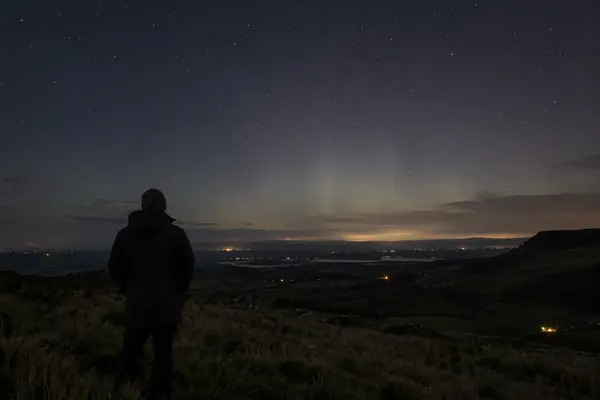
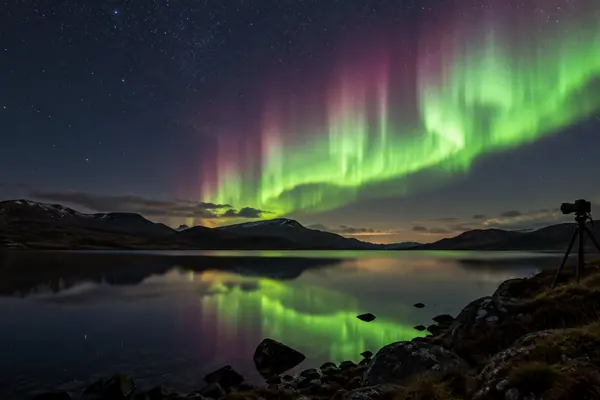
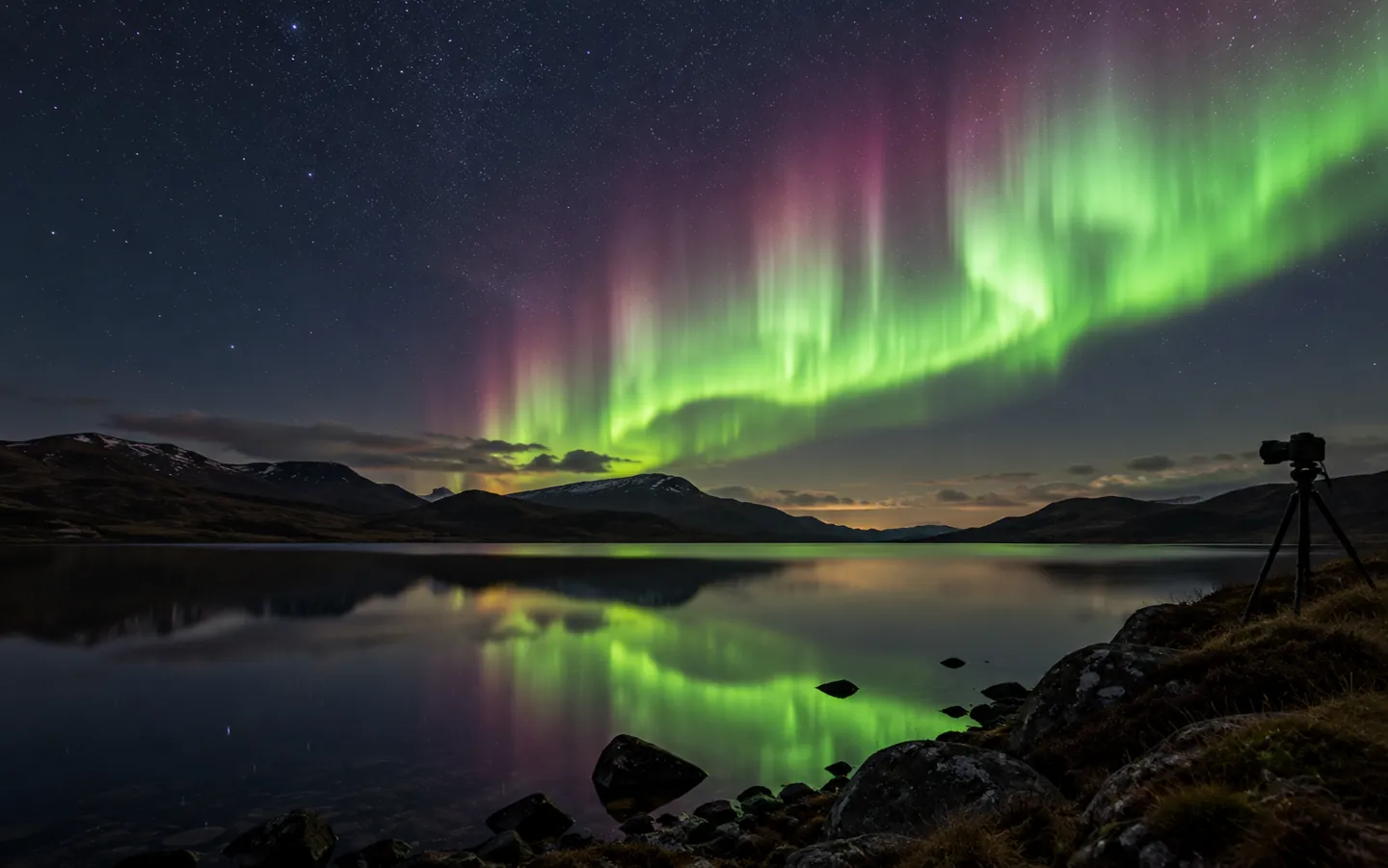
Many aurora photos from the northern US show colors nobody standing there could see.
That is not trickery. In the dark your eyes switch to cells that cannot see color, while a camera on a tripod keeps gathering light for many seconds. NOAA's space weather forecasts tell you when it is worth trying.
5–30 s a typical exposure
Read the Kp indexTHE SHORT ANSWER
The aurora is often there before you can see it.
A still camera and a few seconds of exposure reveal it.
THE SETTINGS
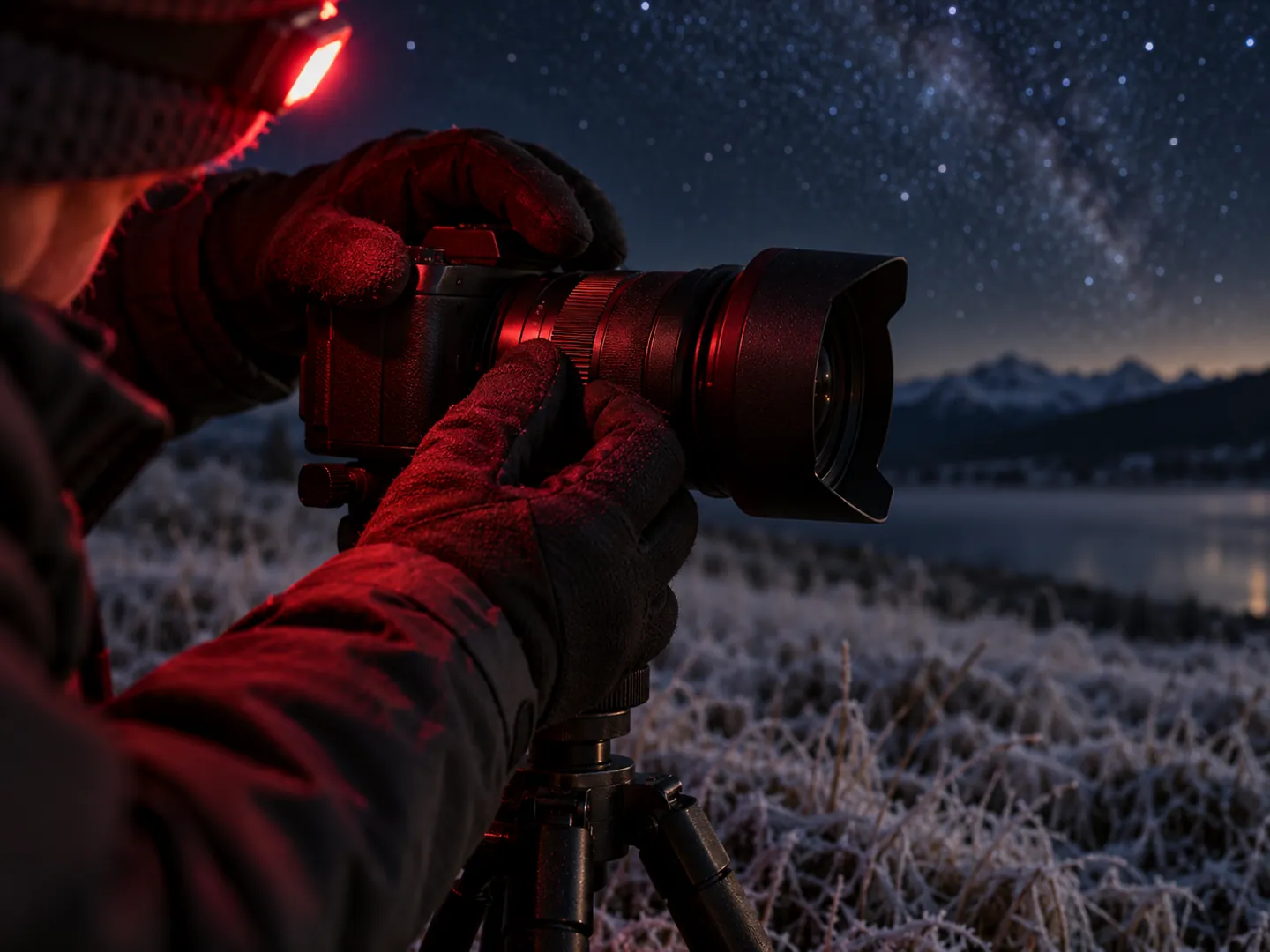
National Geographic suggests a tripod, manual focus at infinity, a wide lens and exposures between five and 30 seconds.
Settings to tryTHE EYE
In the dark we rely on rod cells, which are more than a thousand times as sensitive as cone cells but see no color.
Why eyes miss itTHE ALERT
NOAA's Space Weather Prediction Center rates geomagnetic activity on the Kp index from 0 to 9. The higher it climbs, the farther south the aurora reaches.
Read the Kp index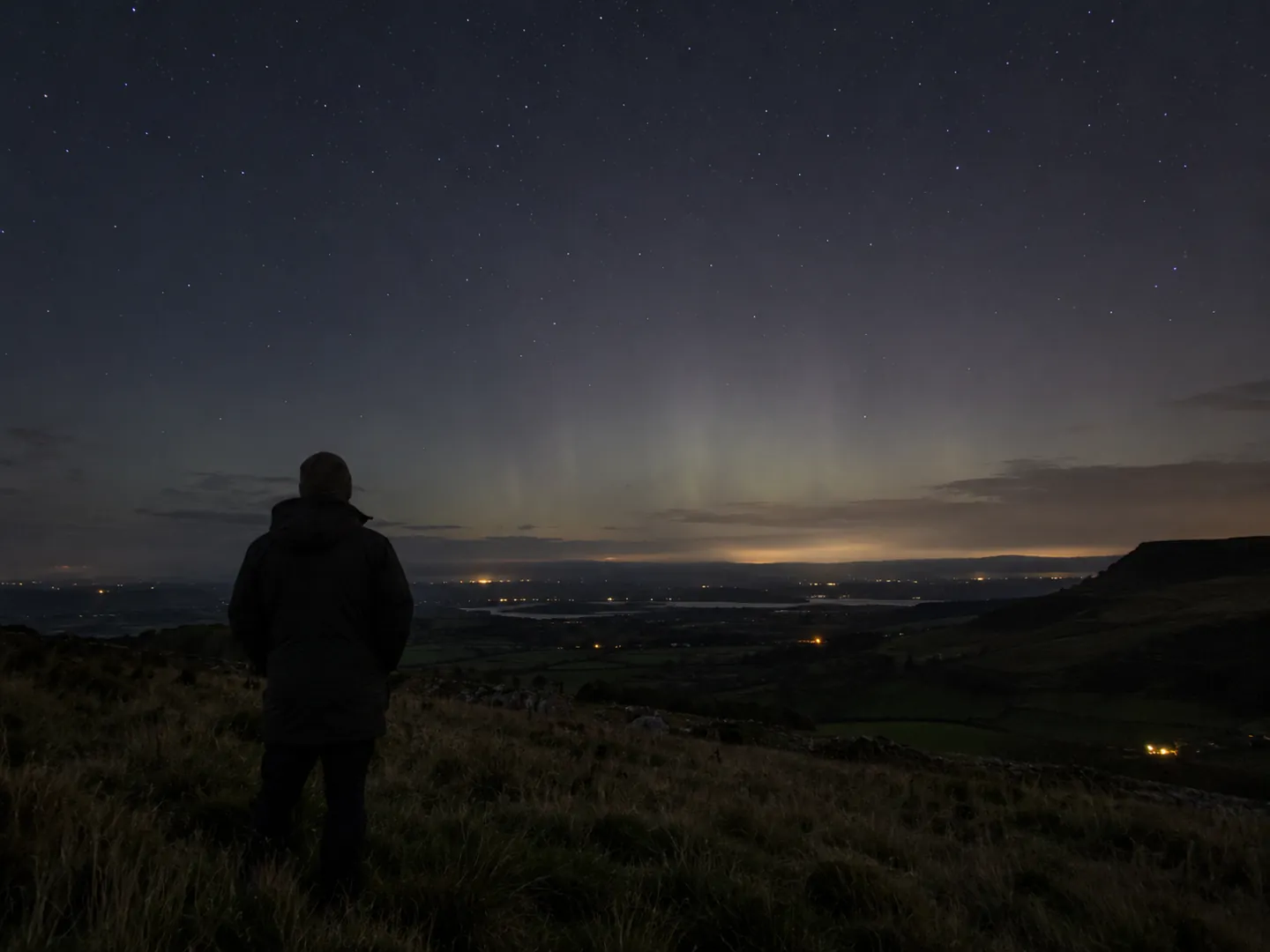
FOUR STEPS TO TRY
These starting points come from National Geographic's guide. Every camera differs, so it suggests test shots of the night sky first.
Stability is everything with the shutter open for seconds. Use a remote release or the self-timer to avoid shake.
You are aiming at the far distance, so switch to manual focus with the lens fixed on infinity.
A lens with an f-number of 4.0 or lower lets you avoid pushing the ISO so high that noise creeps in.
Try exposures from five to 30 seconds and adjust aperture, ISO and shutter speed to the strength of the display. Shoot RAW if you can.
TWO NUMBERS WORTH KNOWING
One figure for the camera's exposure,
one for how long your eyes take to adjust.
5–30 s
Range of exposures to try
Take a number of varied exposures between five and 30 seconds. Too long and stars smear into blobs; too short and the frame is too dark.
EXPOSURE · NAT GEO
30 min
Time to reach full dark-adapted vision
The Lancaster glossary says optimal dark-adapted vision takes 30 minutes or longer, because rods adapt much more slowly than cones.
YOUR EYES · LANCASTER
NOAA notes the aurora can often be seen hundreds of miles south of where it is actually happening, low on the northern horizon, so an open view to the north matters.
READ THE KP INDEX
Pick a Kp level to see what NOAA's Space Weather Prediction Center says it means for seeing aurora. The bar shows how far south a display may reach.
From NOAA SWPC, Tips on Viewing the Aurora. These are approximate averages; you still need a clear, dark sky.
WHY YOUR EYES MISS IT
The Lancaster Glossary of Child Development says the retina has about 120 million rods but only 6 to 7 million cones. Cones handle color and fine detail; rods handle dark-adapted vision and see only in shades of gray.
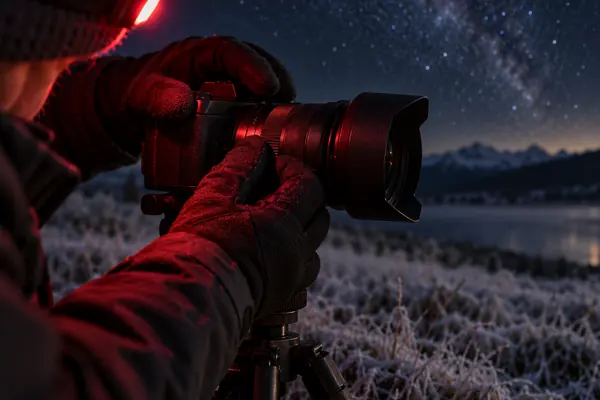
So a faint aurora can look like a pale gray cloud to the eye while a camera, gathering light for many seconds, records its green and pink. National Geographic suggests a headlamp with a red-light option to keep your night vision.
Questions
In low light our eyes rely on rod cells, which are very sensitive but color-blind. A camera on a tripod can gather light for many seconds and records colors the eye cannot pick out.
National Geographic suggests a tripod, manual focus at infinity, a wide lens at f/4 or lower, and a range of exposures from five to 30 seconds, adjusting ISO to the display.
The same guide says many newer phones can take decent aurora images if held still, ideally on a tripod with the timer, flash off and night mode or manual settings on.
Watch NOAA's Space Weather Prediction Center. At Kp 6 to 7 the aurora might be seen from the northern edge of the US, and it is usually best between 10 p.m. and 2 a.m. local time, around the spring and fall equinoxes.
The Lancaster glossary says optimal dark-adapted vision takes 30 minutes or longer, because rods adapt much more slowly than cones.
Updated
ABOUT THIS NAME
newmirrorlesscamera.com is part of the DoodleSale portfolio. It isn't in an auction right now, but you can ask about leasing it.